iOS 26 Privacy Updates: Which Parts of Your Measurement Stack are Affected, and Why.

by
Bo Liang
iOS 26 arrives on September 15, with the update slated to hit billions of devices over-the-air over the coming months.
Beyond sleek UI updates like Liquid Glass and increasing adoption of AI features through Apple Intelligence, this latest iOS update promises sweeping privacy updates that might impact the attribution and measurement models that eCommerce brands rely on.
These changes are reminiscent of iOS 14, when Apple unveiled sweeping privacy changes that broke much of the measurement methodologies of the time, and brands are understandably worried about the potential impact here.
Adoption of the latest iOS usually hits 66-68% four months after launch, and 88% nine months post-launch — with adoption highest amongst the latest devices. Brands have some time to react, but we wanted to get ahead of these changes by investigating the impact these changes might have.
Executive Summary
iOS 26 tightens privacy (link-tracking + fingerprinting protections) but does not break first-party pixel + UTM attribution in normal browsing for the vast majority of users.
UTMs are usually preserved in default browsing, but can be removed in some protected flows (private browsing/mail/messages) depending on how the link is opened.
URL click identifiers (fbclid, gclid, msclkid, etc.) are the most likely to be affected — especially in Private Browsing and when links are opened from Mail or Messages. In those edge cases, click IDs can be stripped.
Unless a user is explicitly in Private Browsing or using highly restricted link flows, WorkMagic's first-party pixel + server-side integration will continue to capture and resolve conversions reliably.
What Apple changed in iOS 26 (that matters for measurement)
Apple expanded its privacy toolkit in iOS 26 with two main upgrades:
Link Tracking Protection (LTP) — designed to strip tracking parameters like
fbclid,gclid, andmsclkidfrom URLs.Advanced Fingerprinting Protection — Safari now injects “noise” into device signals, making fingerprint-based identification far less reliable.
Here’s how that plays out across different contexts:
Browsing Method | Impact and Takeaways |
|---|---|
Safari (Normal Browsing) | Minimal impact — UTMs are preserved and click IDs will pass through. Brands using first-party pixels will be able to capture landing URLs exactly as before, so there's little impact to measurement. |
Safari (Private Browsing) | Highest impact — Link Tracking Protection actively strips click IDs. UTMs may also be affected in some cases. Expect gaps in attribution for Private Browsing sessions. |
Mail & Messages | Links opened from Apple Mail or Messages may have tracking parameters removed, especially click IDs. Mail Privacy Protection continues to anonymize opens and hide IPs. Email and SMS campaigns to Apple users are likely to be affected. |
In-App Browsers (Facebook, Instagram, TikTok, etc) | Impact varies — these browsers don't always follow the same rules as Safari, and might strip, rewrite, or preserve parameters. UTMs still pass more consistently than click IDs. |
Redirects and Link Shorteners | Amplified by iOS 26. Multi-hop redirects and shorteners can cause parameters to be dropped, and might also be scrubbed by Apple's new iOS changes. Always capture UTMs/click IDs on the very first page load, and server-side where possible. |
How iOS 26 could affect attribution
Take a Meta ad, for example:
For Meta Ads, attribution depends heavily on the fbclid parameter passed in the CTA URL. The fbc cookie is generated from that fbclid, and when combined with the fbp browser cookie ID, Meta can deterministically match which user (fbp) clicked on which ad (fbclid).
When iOS 26 strips the fbclid, Meta must fall back on weaker identity signals (cookies, IP address, PII) combined with timing correlations between ad impressions/clicks and on-site pageviews.
Conversions may still be counted toward Meta overall, but the link to the specific ad or campaign often breaks.
This reduces the accuracy of ad-level attribution, which in turn makes Meta’s optimization models less effective.
The end result: higher advertiser costs and less confidence in which ads are truly driving performance.
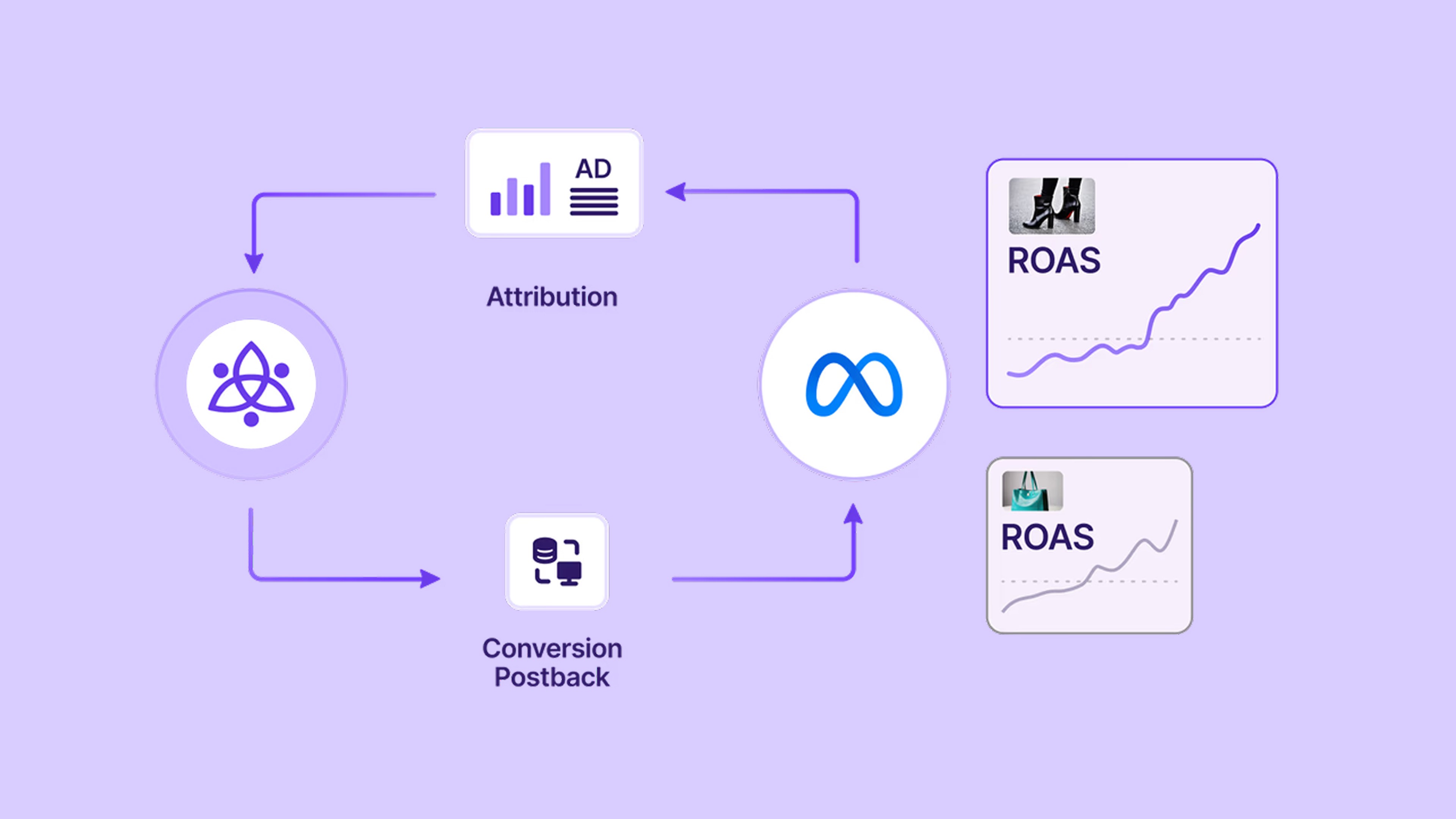
Why WorkMagic's first-party pixel + UTM strategy remains precise
First-party pixel advantage
Our pixel runs under the client’s domain and captures landing params (UTM + any available click ID) on page load and/or via an early server call. That capture is first-party and not dependent on third-party cookies — this is resilient to many privacy changes.
UTM as canonical source
We capture UTMs and click IDs the moment a visitor lands, store them securely on our servers, and connect them to conversions even if the browser later removes those parameters.
Click IDs are fragile but useful
When available, gclid/fbclid provide deterministic joins to ad platforms. iOS 26 increases situations where those IDs are missing (private browsing, some mail/messages flows). Please expect lower click-id coverage in those flows. In these situations, our pixel + UTM approach makes up for the fragility of click ID availability.
Fingerprinting fallback is weaker
Advanced fingerprinting protection intentionally reduces the reliability of deterministic device fingerprints. As of now, we do not rely on fingerprinting as the primary identity signal, and treat it as probabilistic and degraded. Marketing incrementality testing provided by the WorkMagic platform provides another safeguard against this.
What we're doing next
WorkMagic is committed to continue our testing across Safari, Private Browsing, Mail, Messages, and major in-app browsers. We're monitoring changes and developments closely, and commit to updating our customers if we detect any significant impact.