Jordan Craig has been a constant presence in streetwear since 1989, when the brand was established in New York. More recently, the brand has shifted its focus from revenue-driven targets to profit-oriented ones.
With this change, the brand needed a measurement partner that could accurately measure the outcomes of their marketing campaigns and enable them to make well-informed, profit-driven adjustments.
Key Takeaways:
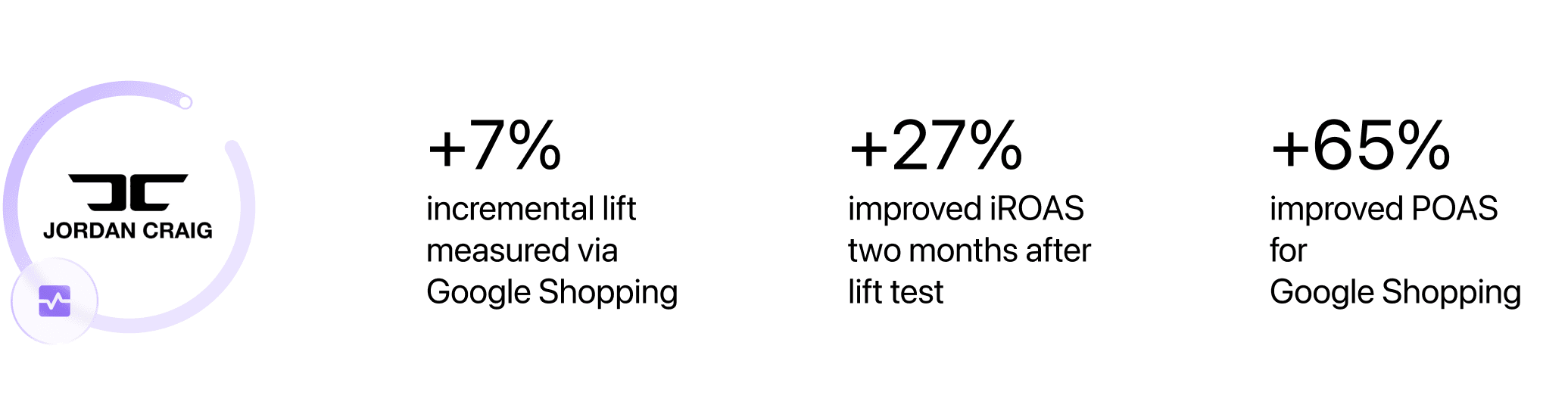
+7% incremental lift from Google Shopping, measured via geo lift testing
+27% improved ROAS in the two months after the lift test
+65% improvement in profitability (POAS) for Google Shopping campaigns
An incrementality-based decision-making framework for launching new ad channels
“We’re seeing the industry shift to where profit, instead of growth at all costs, is becoming what an increasing percentage of what VCs and companies are focused on. That's why we started working with WorkMagic."

Robert Varon, Director of Marketing at Jordan Craig
About Jordan Craig
Jordan Craig is a premium menswear brand founded in 1989 and based in New York. Known for its streetwear-inspired fits and fashion-forward denim, the brand offers collections that blend luxury aesthetics with affordability. They have built a loyal customer base through both direct-to-consumer eCommerce and retail partnerships, with products featured in major retailers like Jimmy Jazz, Snipes, and Zumiez.
An industry-wide refocus towards profitable growth required a different approach to measurement
"Three years ago, profit wasn't the top priority for most brands, it was revenue," said Robert Varon, Director of Marketing at Jordan Craig. Back then, most brands and VCs were concerned with building a large, loyal customer base, and securing as much market share as they could.
But starting from late 2022, brands were sensing a shift in both investor and consumer sentiment. With that sea change, growing profitably became the focus. "I was brought on to Jordan Craig to focus on the bottom line. They could've grown $10 million a year, but spent $20 million to do that. My mandate was to drive new customer profit for the brand."
For Jordan Craig, two core metrics mattered the most: new customer profit, and a healthy incremental return on ad spend (iROAS) that accounted for overheads and COGS.
Incrementality testing as the foundation of decision-making
Robert and his team decided to implement incrementality testing across all their paid media channels through WorkMagic, which they used as their source of truth.
“We came from another measurement platform. And the big difference here is the commitment to data, incrementality, and the effort to ground all decisions in it.”
How incrementality grounds Jordan Craig's measurement framework
Here's how Jordan Craig uses those tools in their own internal decision-making framework:

Their evaluation framework begins with WorkMagic's geo lift tests, which give the team a clear understanding of whether the new channel is incremental and capable of profitably acquiring new customers — one of their key growth metrics.
The team then turns to WorkMagic's Media Budget Optimizer to simulate various spend scenarios. WorkMagic uses Incrementality-calibrated MMM (iMMM) to build saturation curves that forecast performance and provide recommendations across different spend levels and targets.

Robert's goal at this stage is to find a spend level that will maximize growth while keeping iROAS above their internal benchmark. This would make sure the brand grows — profitably.
"If iROAS is well above our benchmark, we'll either increase our budgets or bids. We're willing to pay that more because we know it'll lead to profitable growth, and we have WorkMagic to help walk us into the right budget and bid for that goal."
Jordan Craig's incrementality-based framework produced well-optimized campaigns that improved POAS for Google Shopping by 65%
The launch of Google Shopping ads is a great example of Jordan Craig's growth and measurement framework in motion. By putting the new channel through its paces, here's what the team found:
Google Shopping was an incremental and efficient channel, with iROAS up to 9.2x higher than some channels
Through a geo lift test run on WorkMagic, the team found that Google Shopping was indeed an incremental channel, leading to 7% more orders.
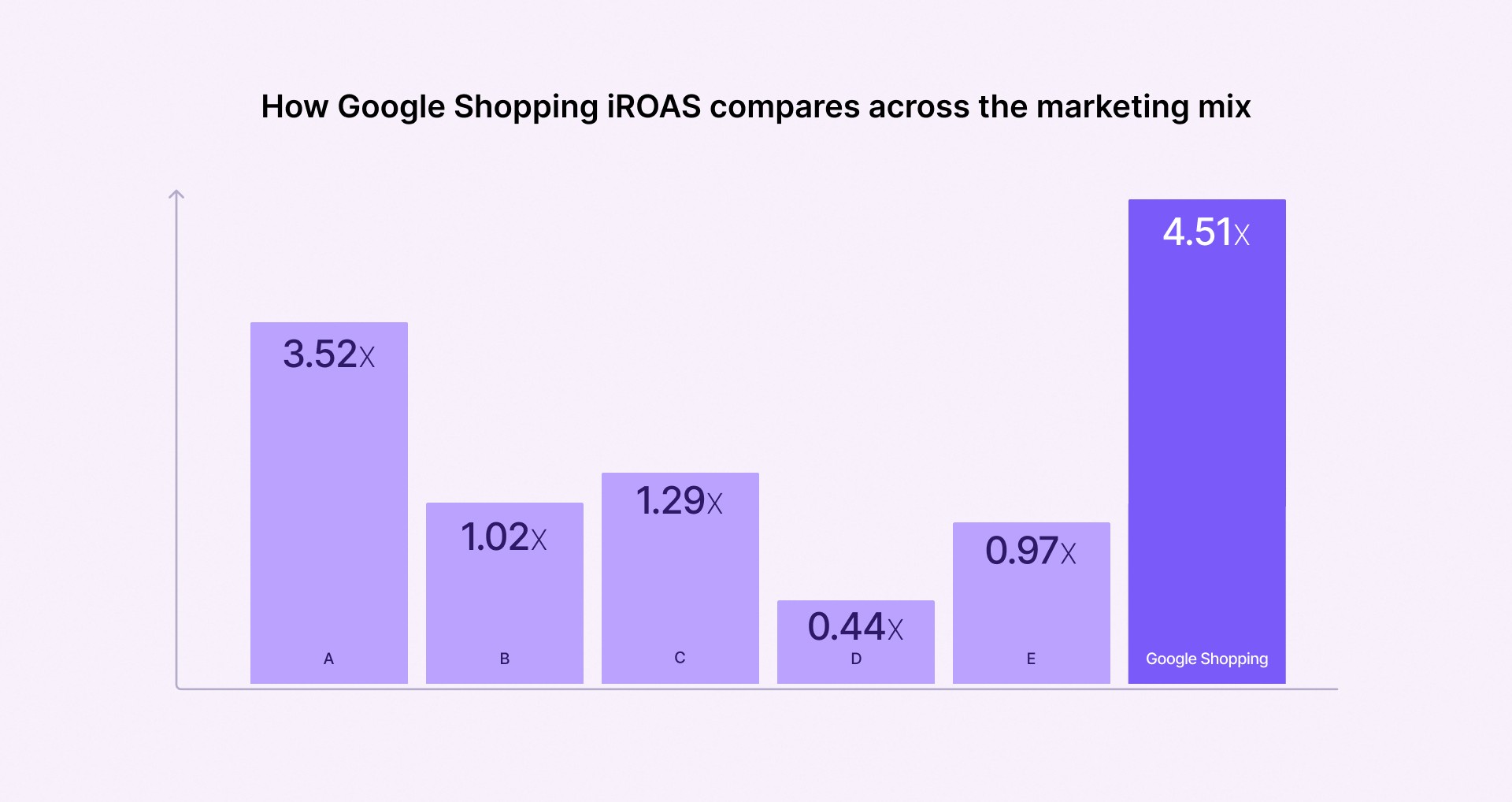
Taking the analysis a step further, the team looked at iROAS to assess the efficiency of their ad channels. They found that Google Shopping had the highest iROAS in the marketing mix, with an iROAS 32% higher than the next highest performing channel, and 9.2x higher than the lowest performing channel.
These results confirmed that Google Shopping met Jordan Craig's criteria — a new-customer-profitable channel that had high iROAS — and deserved its spot in the company's marketing mix.
A complete corporate cultural shift to measurement
With WorkMagic and Jordan Craig's approach to measurement and experimentation firmly in place, the team has completed a cultural shift to incrementality testing.
"Everyone on our team, from analysts, to channel managers, to the C-suite, can come in, easily understand the data, and make their own optimizations from it," said Robert. "That's a huge selling point of the platform — everyone gets exactly what they need".
Instead of relying on click-based attribution, the team now runs geo lift tests as a default for evaluating new and existing channels. This testing-first culture enables more confident, data-backed decisions across the organization.
Drilling down to drive new customer profit
With their primary focus on profitable growth and new customer sales, the team uses WorkMagic's incrementality-adjusted attribution model to drill down into campaign- and ad-level performance.
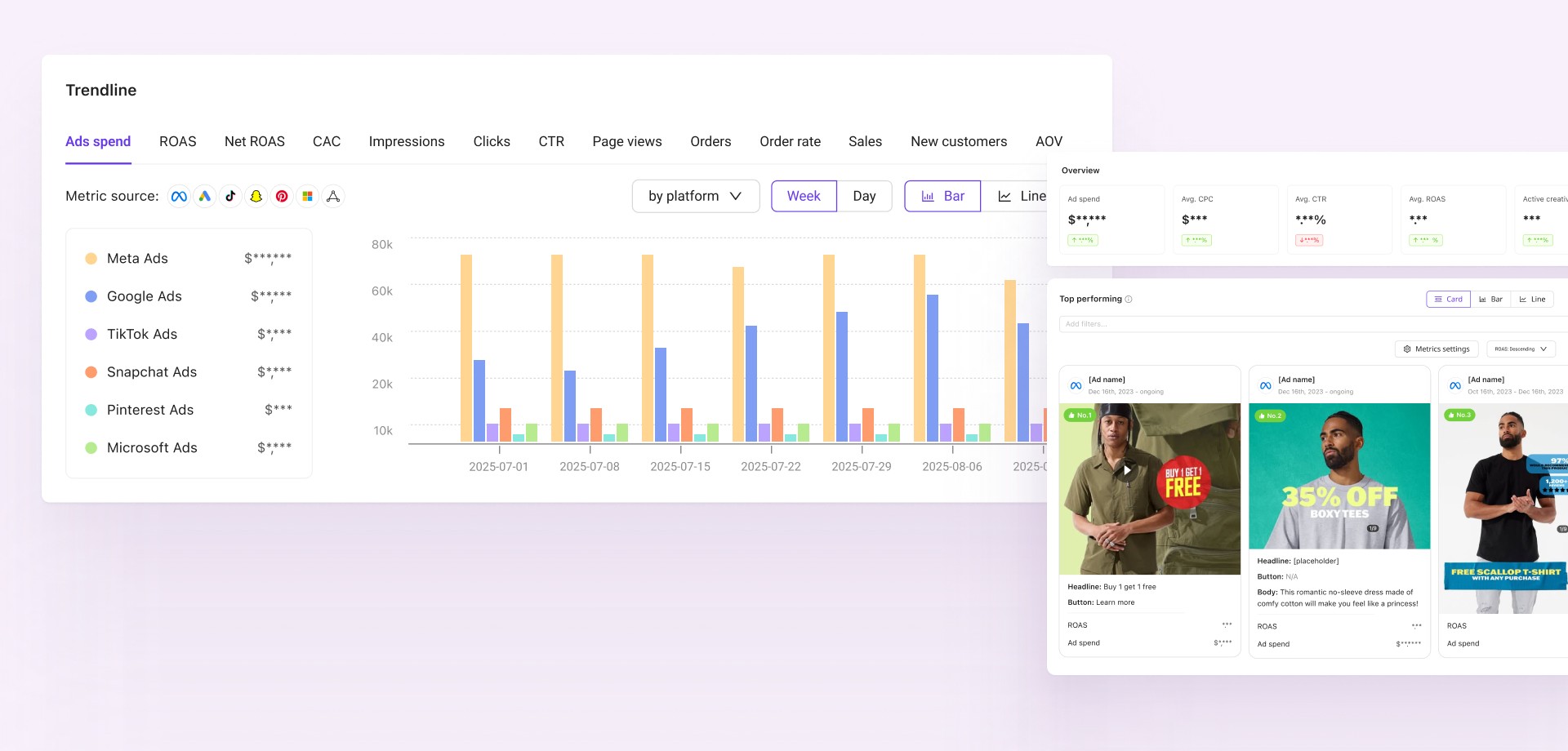
"For more text-driven channels, we stop at the campaign level. But for awareness channels, where creative plays a big role, we'll drill down to the adset level, all while keeping the same focus: is this going to lead to profitable new customer sales?" explained Robert.
When the team sees underperforming campaigns and ads, they move quickly to replace creatives and reduce overall spend. These micro-adjustments allow Jordan Craig to keep each channel performing efficiently and avoid unprofitable ad spending.
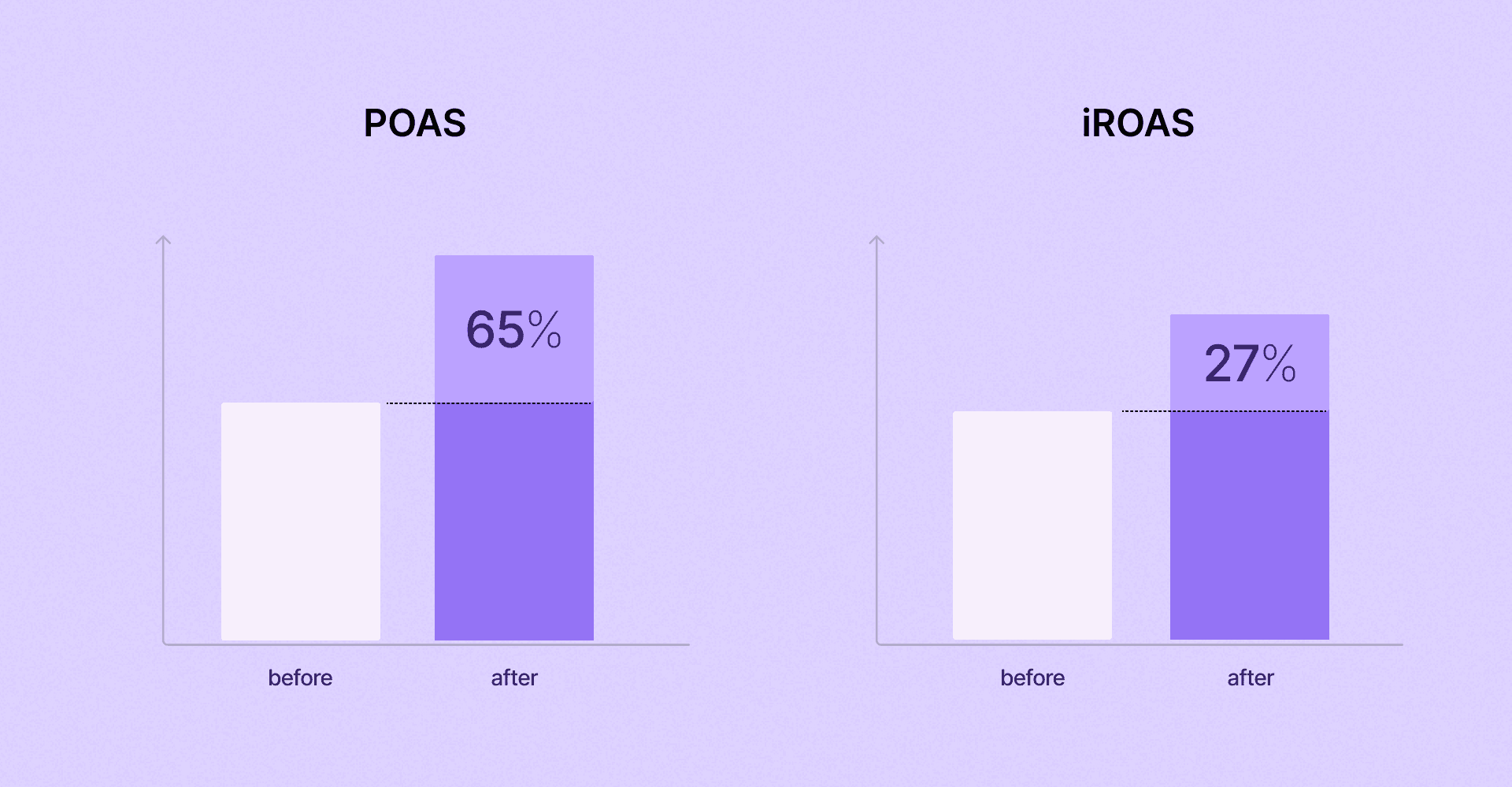
For Google Shopping, those adjustments led to a +65% increase in profit on ad spend (POAS) and a 27% improvement in iROAS two months after the test was conducted and optimization was made.
Expanding to new destinations
With their latest expansion into Amazon, Jordan Craig's measurement challenge has gotten even more complex.
“Amazon’s never going to tell us, ‘Hey, by the way, your CTV ads drove these orders.'" said Robert. "That’s just not how it works. We're excited to see the incremental lift of a channel across both Shopify and Amazon, so we can give proper credit to each channel."
With incrementality tests as the default method for evaluating ad channels, the team is now looking forward to measuring how much of a halo effect is occurring on platforms like Amazon.
Jordan Craig’s journey from growth-at-all-costs to profit-first thinking shows how a disciplined measurement framework can transform a brand’s marketing performance.
By leaning into incrementality testing, iMMM-calibrated spend optimization, and incrementality-adjusted attribution, the team can fully measure their ad performance and optimize against real targets. They now have the clarity and confidence to scale into the next phase of growth.
Ready to implement incrementality testing as your brand's ground truth? Book a demo here.