Marketing Intelligence Platforms: The Causal Layer DTC Needs?

by
Isaac Lee, Content Marketing Lead
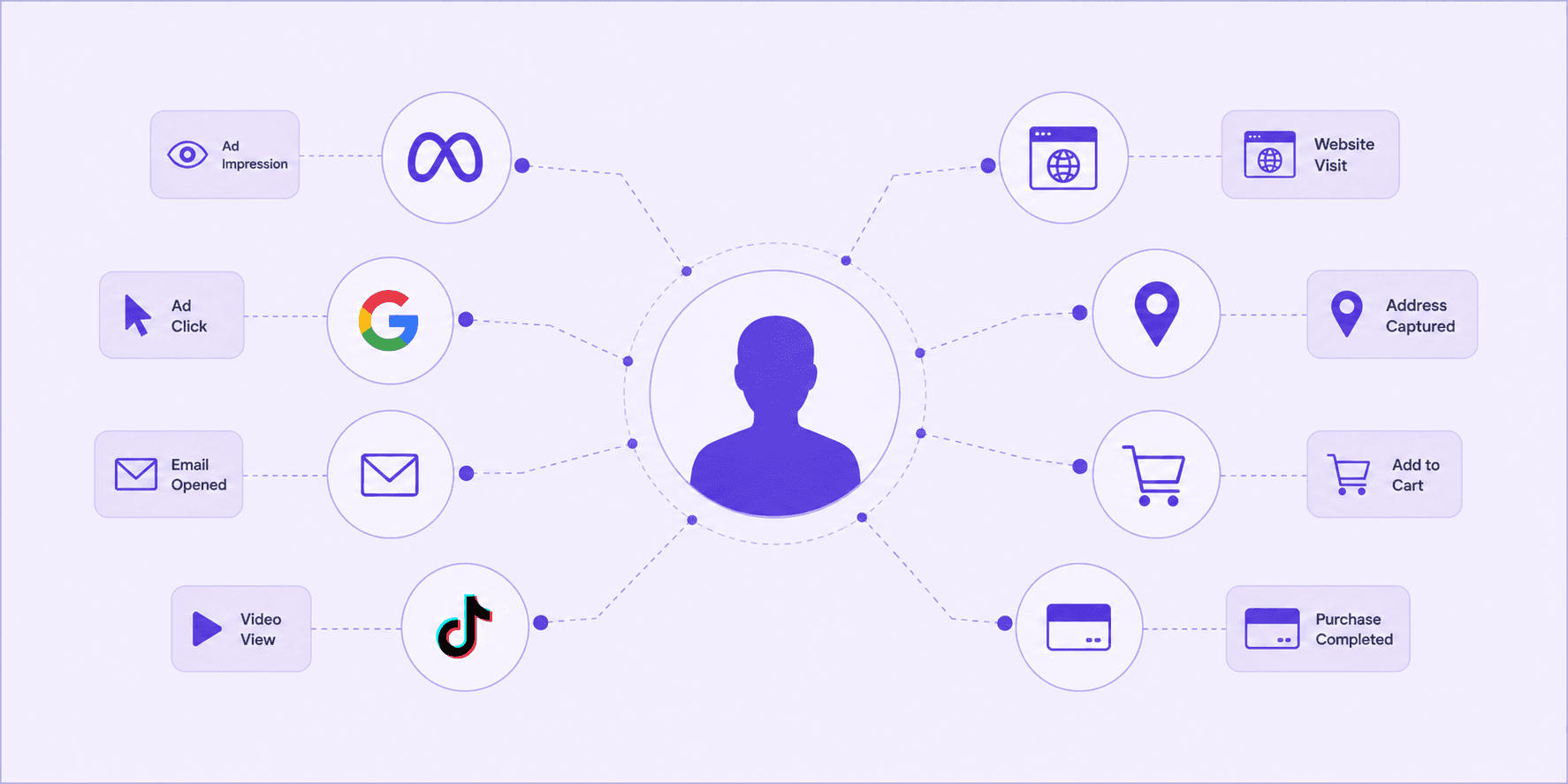
Most marketing intelligence tools deliver one thing well: a consolidated view of what happened. Dashboards unify channel data. Reports track spend against returns. Customer journey maps stitch touchpoints across sessions. For teams drowning in disconnected spreadsheets, this is genuinely useful.
But for DTC and omnichannel brands making budget decisions in a privacy-constrained world, dashboards that aggregate what happened are no longer sufficient. The real question is what your marketing caused, and that requires a different kind of intelligence entirely.
What marketing intelligence actually means for DTC brands
The term "marketing intelligence" tends to get conflated with competitive research or business intelligence dashboards. For DTC brands, the more precise definition is this: understanding the causal performance of your own campaigns well enough to make confident budget decisions.
That means going beyond "our TikTok ROAS was 2.4x last month." It means understanding whether TikTok drove those sales at all, which channels produced revenue that wouldn't have happened otherwise, and what the true return looks like when purchases on Amazon, retail, and other platforms are counted alongside direct conversions.
The distinction matters because correlation is cheap and causation is scarce. Almost any measurement tool can tell you which channels had revenue activity alongside ad spend. Very few can tell you whether the spend caused the revenue.
What most marketing intelligence platforms do well
Data aggregation platforms have genuine strengths worth naming. They pull spend and performance data from Meta, Google, TikTok, and other channels into a single interface. They surface LTV trends, retention curves, and creative performance comparisons. For brands that need a unified view of their marketing activity, they solve a real problem.
Customer journey mapping, in particular, offers useful context: understanding the sequence of touchpoints before conversion, identifying which campaigns drive first-purchase customers versus repeat buyers, and tracking cohort behavior over time. These capabilities inform creative and channel strategy in ways that raw platform data cannot.
The limitation is not that these tools fail at what they do. The limitation is what comes next.
The tracking dependency problem
Every platform that maps customer journeys depends on the same underlying infrastructure: pixels, cookies, click IDs, and server-side events. To stitch a journey together, the platform needs to observe the same user across touchpoints. That observation requires tracking signals.
Since Apple's App Tracking Transparency framework rolled out in iOS 14.5, a significant share of iOS users have opted out of cross-app tracking. Industry estimates consistently put the opt-out rate above 60%. Those users are largely invisible to pixel-based measurement systems. Cookie deprecation is narrowing the observable signal further across browsers.
The result is structural, not fixable by better tooling. Journey mapping built on incomplete tracking data produces incomplete intelligence. The gap between what is observed and what actually happened grows as privacy norms tighten, and no amount of modeling can fully reconstruct what was never captured.
This is explored in more depth in WorkMagic's analysis of attribution signals vs. causal attribution and in the challenges of marketing attribution that tracking erosion creates.
The causal intelligence gap: what journey mapping misses
The tracking problem is compounded by a more fundamental issue: most of the revenue that advertising drives never touches a tracking pixel in the first place.
When Nordic Naturals ran a pause-to-measure geo lift test on their TikTok strategy, the results showed that 99.6% of TikTok's incremental impact landed on Amazon, despite campaigns directed at their DTC site. No customer journey map captures an Amazon purchase driven by a TikTok ad; the user never clicked through, and the conversion happened in a walled garden.
Neuro validated a 3× iROAS and a 63% halo effect on TikTok Shop from CTV advertising, a cross-platform impact that any attribution system dependent on click-through tracking would have missed entirely. The cross-channel signal was real and substantial; it simply did not exist within the data boundaries any single platform could observe.
These are not edge cases. For omnichannel brands selling across Shopify, Amazon, retail, and TikTok Shop simultaneously, the majority of ad-driven revenue may flow through channels that no pixel ever touches. Incrementality testing solves this by measuring at the geography level rather than the user level: compare revenue in test regions against control regions, and the difference is the causal contribution of the campaign, with no individual tracking required.
What causal marketing intelligence looks like in practice
WorkMagic's approach layers three capabilities that together produce causal intelligence rather than correlational reporting.
Geo incrementality testing establishes causal baselines per channel. By dividing matched geographic markets into test and holdout groups, the platform measures aggregate revenue differences with statistical rigor. The method works whether conversions happen on Shopify, Amazon, a retail POS system, or TikTok Shop, because it measures totals, not tracked individual journeys.
Incrementality-calibrated MMM extends those causal baselines into budget planning. Marketing mix models historically suffer from the same biases as attribution: they learn from observed data rather than causal experiments. Calibrating MMM with incrementality test results corrects those biases and produces budget recommendations grounded in actual causal returns rather than correlation coefficients.
Incrementality-adjusted attribution recalibrates daily reporting so that decisions between test cycles are still anchored to causal reality rather than platform self-reporting.
The results are consistent across brands. Liquid IV used a 3-cell geo lift test and found that 62% of TikTok's incremental impact landed on Amazon, impact that platform data had never captured. True Classic found TikTok's real impact was 74% higher than any-click attribution showed, with a 12% halo on Amazon and a 19% lift in Google organic search.
How to evaluate a marketing intelligence platform for DTC
When assessing platforms in this category, the questions that matter most are those that expose the measurement methodology:
Does it measure cross-channel halo effects? If a platform can only report on conversions that touch its own tracking infrastructure, it cannot capture the majority of omnichannel impact. Ask specifically whether Amazon, retail POS, and TikTok Shop are included in measurement, not just as data sources, but as destinations for incrementally measured conversions.
Does it produce iROAS or only ROAS? Platform-reported ROAS and last-click ROAS both count revenue that would have happened anyway. Incremental ROAS (iROAS) measures only the revenue caused by the campaign. The difference between the two numbers is the degree to which a platform is overvaluing a channel.
Does it require individual-level tracking? This is the key differentiator. Geo-based measurement requires no individual user tracking and is therefore unaffected by iOS ATT opt-outs, cookie deprecation, or walled-garden data restrictions. Pixel-dependent platforms are structurally limited as privacy norms continue tightening.
Can it connect Shopify, Amazon, and retail in a single measurement frame? For omnichannel brands, any platform that measures only one storefront is measuring a fraction of the business.
For guidance on applying these criteria to a full measurement stack, see WorkMagic's framework for how to optimize marketing spend across multiple channels and the guide to building a marketing measurement plan. The Media Performance Index 2026 provides cross-channel iROAS benchmarks across DTC and omnichannel brands that are useful context when assessing any platform's measurement claims. For TikTok specifically, the TikTok Measurement one-pager covers the halo effect patterns that causal intelligence platforms need to capture.
Frequently asked questions
What are marketing intelligence platforms?
Marketing intelligence platforms are tools that collect, consolidate, and analyze data from advertising channels and customer touchpoints to inform marketing decisions. Most platforms in this category focus on data aggregation and reporting: pulling spend and performance data from Meta, Google, TikTok, and other channels into a unified view. More advanced platforms layer causal measurement capabilities, such as geo incrementality testing, that reveal which channels actually drove revenue rather than which channels correlated with it.
What is an example of a marketing intelligence system?
A marketing intelligence system might combine cross-channel reporting, customer journey mapping, and incrementality testing in a single platform. WorkMagic is an example built specifically for DTC and omnichannel brands: it runs geo lift tests to establish causal channel performance, calibrates marketing mix models with those test results, and produces incrementality-adjusted attribution for ongoing decision-making. Other categories of tools include data aggregation platforms (focused on dashboards and reporting), analytics platforms (focused on web and app tracking), and CDPs (focused on audience data).
What is marketing intelligence?
Marketing intelligence is the information a brand uses to understand the performance of its marketing and make better decisions about where to invest. At a basic level, this means consolidated reporting across channels. At a more rigorous level, it means understanding causality: which campaigns drove revenue that would not have happened otherwise, including revenue that landed on platforms the ads did not directly link to. The distinction between correlational and causal intelligence matters most for budget allocation, where overvaluing high-attribution channels leads to misallocated spend.
How is marketing intelligence different from business intelligence?
Business intelligence typically refers to organization-wide data analysis covering finance, operations, sales, and marketing combined. Marketing intelligence is a subset focused specifically on campaign performance, channel effectiveness, and customer acquisition. The practical difference for DTC brands: BI tools are designed for reporting on what happened across the business, while marketing intelligence platforms are designed to help marketing teams decide what to do next. Causal marketing intelligence goes further still, generating not just descriptive data but evidence-based answers to questions like "what incremental revenue did this channel cause?"